Quasi-state

A quasi-state or state-like entity, including what is termed a proto-state, is a political entity that does not represent a fully institutionalised or autonomous sovereign state.
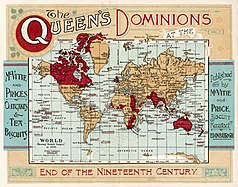
The precise definition of quasi-state in political literature fluctuates depending on the context in which it is used. It has been used by some modern scholars to describe the self-governing British colonies and dependencies that exercised a form of home rule but remained crucial parts of the British Empire and subject firstly to the metropole's administration. Similarly, the Republics of the Soviet Union, which represented administrative units with their own respective national distinctions, have also been described as quasi-states.
In more recent usage, the term quasi-state has most often been evoked in reference to militant secessionist groups who claim, and exercise some form of territorial control over, a specific region, but which lack institutional cohesion. Such quasi-states include the Republika Srpska and Herzeg-Bosnia during the Bosnian War and Azawad during the 2012 Tuareg rebellion. The Islamic State is also widely held to be an example of a modern quasi-state or proto-state.
Contents
History

The term "proto-state" has been used in reference to contexts as far back as Ancient Greece, to refer to the phenomenon that the formation of a large and cohesive nation would often be preceded by very small and loose forms of statehood. For instance, historical sociologist Gary Runciman describes the evolution of social organisation in the Greek Dark Ages from statelessness, to what he calls semistates based on patriarchal domination but lacking inherent potential to achieve the requirements for statehood, sometimes transitioning into protostates with governmental roles able to maintain themselves generationally, which could evolve into larger and more centralised entities fulfilling the requirements of statehood by 700 BC in the archaic period.
Most ancient proto-states were the product of tribal societies, consisting of relatively short-lived confederations of communities that united under a single warlord or chieftain endowed with symbolic authority and military rank. These were not considered sovereign states since they rarely achieved any degree of institutional permanence and authority was often exercised over a mobile people rather than measurable territory. Loose confederacies of this nature were the primary means of embracing a common statehood by people in many regions, such as the Central Asian steppes, throughout ancient history.
Proto-states proliferated in Western Europe during the Middle Ages, likely as a result of a trend towards political decentralisation following the collapse of the Western Roman Empire and the adoption of feudalism. While theoretically owing allegiance to a single monarch under the feudal system, many lesser nobles administered their own fiefs as miniature "states within states" that were independent of each other. This practice was especially notable with regards to large, decentralised political entities such as the Holy Roman Empire, that incorporated many autonomous and semi-autonomous proto-states.
Following the Age of Discovery, the emergence of European colonialism resulted in the formation of colonial proto-states in Asia, Africa, and the Americas. A few colonies were given the unique status of protectorates, which were effectively controlled by the metropole but retained limited ability to administer themselves, self-governing colonies, dominions, and dependencies. These were distinct administrative units that each fulfilled many of the functions of a state without actually exercising full sovereignty or independence. Colonies without a sub-national home rule status, on the other hand, were considered administrative extensions of the colonising power rather than true proto-states. Colonial proto-states later served as the basis for a number of modern nation states, particularly on the Asian and African continents.
During the twentieth century, some proto-states existed as not only distinct administrative units, but their own theoretically self-governing republics joined to each other in a political union such as the socialist federal systems observed in Yugoslavia, Czechoslovakia, and the Soviet Union.

Another form of proto-state that has become especially common since the end of World War II is established through the unconstitutional seizure of territory by an insurgent or militant group that proceeds to assume the role of a de facto government. Although denied recognition and bereft of civil institutions, insurgent proto-states may engage in external trade, provide social services, and even undertake limited diplomatic activity. These proto-states are usually formed by movements drawn from geographically concentrated ethnic or religious minorities, and are thus a common feature of inter-ethnic civil conflicts. This is often due to the inclinations of an internal cultural identity group seeking to reject the legitimacy of a sovereign state's political order, and create its own enclave where it is free to live under its own sphere of laws, social mores, and ordering. Since the 1980s a special kind of insurgent statehood has emerged in form of the "Jihadi proto-state", as the Islamist concept of statehood is extremely flexible. For instance, a Jihadi emirate can be simply understood as a territory or group ruled by an emir; accordingly, it might rule a significant area or just a neighborhood. Regardless of its extent, the assumption of statehood provides Jihadi militants with important internal legitimacy and cementes their self-identification as frontline society opposed to certain enemies.
The accumulation of territory by an insurgent force to form a sub-national geopolitical system and eventually, a proto-state, was a calculated process in China during the Chinese Civil War that set a precedent for many similar attempts throughout the twentieth and twenty-first centuries. Proto-states established as a result of civil conflict typically exist in a perpetual state of warfare and their wealth and populations may be limited accordingly. One of the most prominent examples of a wartime proto-state in the twenty-first century is the Islamic State of Iraq and the Levant, that maintained its own administrative bureaucracy and imposed taxes.
Theoretical basis
The definition of a proto-state is not concise, and has been confused by the interchangeable use of the terms state, country, and nation to describe a given territory. The term proto-state is preferred to "proto-nation" in an academic context, however, since some authorities also use nation to denote a social, ethnic, or cultural group capable of forming its own state.
A proto-state does not meet the four essential criteria for statehood as elaborated upon in the declarative theory of statehood of the 1933 Montevideo Convention: a permanent population, a defined territory, a government with its own institutions, and the capacity to enter into relations with other states. A proto-state is not necessarily synonymous with a state with limited recognition that otherwise has all the hallmarks of a fully functioning sovereign state, such as Rhodesia or the Republic of China, also known as Taiwan. However, proto-states frequently go unrecognised since a state actor that recognises a proto-state does so in violation of another state actor's external sovereignty. If full diplomatic recognition is extended to a proto-state and embassies exchanged, it is defined as a sovereign state in its own right and may no longer be classified as a proto-state.

Throughout modern history, partially autonomous regions of larger recognised states, especially those based on a historical precedent or ethnic and cultural distinctiveness that places them apart from those who dominate the state as a whole, have been considered proto-states. Home rule generates a sub-national institutional structure that may justifiably be defined as a proto-state. When a rebellion or insurrection seizes control and begins to establish some semblance of administration in regions within national territories under its effective rule, it has also metamorphosed into a proto-state. These wartime proto-states, sometimes known as insurgent states, may eventually transform the structure of a state altogether, or demarcate their own autonomous political spaces. While not a new phenomenon, the modern formation of a proto-states in territory held by a militant non-state entity was popularised by Mao Zedong during the Chinese Civil War, and the national liberation movements worldwide that adopted his military philosophies. The rise of an insurgent proto-state was sometimes also an indirect consequence of a movement adopting Che Guevara's foco theory of guerrilla warfare.
Secessionist proto-states are likeliest to form in preexisting states that lack secure boundaries, a concise and well-defined body of citizens, or a single sovereign power with a monopoly on the legitimate use of military force. They may be created as a result of putsches, insurrections, separatist political campaigns, foreign intervention, sectarian violence, civil war, and even the bloodless dissolution or division of the state.
Proto-states can be important regional players, as their existence impacts the options available to state actors, either as potential allies or as impediments to their political or economic policy articulations.
List of proto-states
Constituent proto-states
Current
| Proto-state | Parent state | Achieved statehood | Since | Source |
|---|---|---|---|---|
 Adygea Adygea |
 Russia Russia |
Russian republic | 1991 | |
 Åland Åland |
 Finland Finland |
No | 1921 | |
 Altai Republic Altai Republic |
Russia |
Russian republic | 1992 | |
 Ashanti Ashanti |
 Ghana Ghana |
No | 1957 | |
 Azad Kashmir Azad Kashmir |
 Pakistan Pakistan |
No | 1975 | |
 Azores Azores |
 Portugal Portugal |
No | 1816 | |
 Bashkortostan Bashkortostan |
Russia |
de jure | 1990 | |
 British Virgin Islands British Virgin Islands |
 United Kingdom United Kingdom |
No | 1960 | |
 Bougainville Bougainville |
 Papua New Guinea Papua New Guinea |
de facto | 2001 | |
 Buryatia Buryatia |
Russia |
Russian republic | 1990 | |
 Canary Islands Canary Islands |
 Spain Spain |
No | 1816 | |
 Catalonia Catalonia |
Spain |
No | 1978 | |
 Cayman Islands Cayman Islands |
United Kingdom |
No | 1962 | |
 Chechnya Chechnya |
Russia |
de facto | 1996 | |
 Chin State Chin State |
 Myanmar Myanmar |
No | 1949 | |
 Christmas Island Christmas Island |
 Australia Australia |
No | 1958 | |
 Chuvashia Chuvashia |
Russia |
Russian republic | 1992 | |
 Cook Islands Cook Islands |
 New Zealand New Zealand |
de jure | 1888 | |
 Corsica Corsica |
 France France |
No | 1978 | |
 Curaçao Curaçao |
 Netherlands Netherlands |
No | 1816 | |
 Dagestan Dagestan |
Russia |
Russian republic | 1991 | |
 Easter Island Easter Island |
 Chile Chile |
No | 1944 | |
 Euskadi Euskadi |
Spain |
No | 1978 | |
 Falkland Islands Falkland Islands |
United Kingdom |
No | 1833 | |
 Faroe Islands Faroe Islands |
 Denmark Denmark |
No | 1948 | |
 Flanders Flanders |
 Belgium Belgium |
No | 1970 | |
 French Polynesia French Polynesia |
France |
No | 1847 | |
 Galicia Galicia |
Spain |
No | 1978 | |
 Greenland Greenland |
Denmark |
No | 1816 | |
 Guam Guam |
 United States United States |
No | 1816 | |
 Guernsey Guernsey |
United Kingdom |
No | 1204 | |
 Indian reservations Indian reservations |
United States |
de jure | 1658 | |
| Indigenous territory (Brazil) |  Brazil Brazil |
No | 1850 | |
 Ingushetia Ingushetia |
Russia |
Russian republic | 1992 | |
 Iraqi Kurdistan Iraqi Kurdistan |
 Iraq Iraq |
No | 1991 | |
 Isle of Man Isle of Man |
United Kingdom |
No | 1828 | |
 Jersey Jersey |
United Kingdom |
de jure | 1204 | |
 Jewish Autonomous Oblast Jewish Autonomous Oblast |
Russia |
de jure | 1934 | |
 Jubaland Jubaland |
 Somalia Somalia |
No | 2001 | |
 Kabardino-Balkaria Kabardino-Balkaria |
Russia |
Russian republic | 1992 | |
 Kachin State Kachin State |
Myanmar |
No | 1949 | |
 Kalmykia Kalmykia |
Russia |
Russian republic | 1992 | |
 Karachay-Cherkessia Karachay-Cherkessia |
Russia |
Russian republic | 1992 | |
 Karelia Karelia |
Russia |
Russian republic | 1991 | |
 Kayah State Kayah State |
Myanmar |
No | 1949 | |
 Kayin State Kayin State |
Myanmar |
No | 1949 | |
 Khakassia Khakassia |
Russia |
Russian republic | 1992 | |
 Komi Republic Komi Republic |
Russia |
Russian republic | 1996 | |
 Madeira Madeira |
Portugal |
No | 1816 | |
 Mari El Mari El |
Russia |
Russian republic | 1990 | |
 Marquesas Islands Marquesas Islands |
France |
No | 1844 | |
 Montserrat Montserrat |
United Kingdom |
No | 1632 | |
 Mon State Mon State |
Myanmar |
No | 1949 | |
 Mordovia Mordovia |
Russia |
Russian republic | 1994 | |
 New Caledonia New Caledonia |
France |
No | 1853 | |
| Noakhali |  Bangladesh Bangladesh |
No | 2005 | |
 Northern Marianas Northern Marianas |
United States |
No | 1899 | |
 North Ossetia-Alania North Ossetia-Alania |
Russia |
No | 1995 | |
 Nunavut Nunavut |
 Canada Canada |
No | 1999 | |
 Puerto Rico Puerto Rico |
United States |
No | 1816 | |
 Puntland Puntland |
Somalia |
No | 1998 | |
 Quebec Quebec |
Canada |
No | 1816 | |
 Saint Helena Saint Helena |
United Kingdom |
No | 1834 | |
 Sakha Republic Sakha Republic |
Russia |
Russian republic | 1991 | |
 Shan State Shan State |
Myanmar |
No | 1949 | |
 Sint Maarten Sint Maarten |
Netherlands |
No | 1848 | |
 South Tyrol South Tyrol |
 Italy Italy |
No | 1926 | |
 Svalbard Svalbard |
Norway |
No | 1992 | |
 Tatarstan Tatarstan |
Russia |
Russian republic | 1990 | |
 Temotu Temotu |
 Solomon Islands Solomon Islands |
No | 1981 | |
 Turks and Caicos Turks and Caicos |
United Kingdom |
No | 1973 | |
 Tuva Tuva |
Russia |
Russian republic | 1992 | |
 Udmurtia Udmurtia |
Russia |
Russian republic | 1990 | |
 United States Virgin Islands United States Virgin Islands |
United States |
No | 1816 | |
 Wallonia Wallonia |
Belgium |
No | 1970 | |
 Wa State Wa State |
Myanmar |
No | 1989 | |
 Zanzibar Zanzibar |
 Tanzania Tanzania |
No | 1964 |
Former
| Proto-state | Parent state | Achieved statehood | Dates | Source |
|---|---|---|---|---|
 Adjara Adjara |
 Georgia Georgia |
No | 1921–2004 | |
 Aruba Aruba |
Netherlands |
No | 1986–1995 | |
 Bophuthatswana Bophuthatswana |
 South Africa South Africa |
De jure | 1977–1994 | |
 Bosnia-Herzegovina Bosnia-Herzegovina |
 Yugoslavia Yugoslavia |
Yes | 1943–1992 | |
 Byelorussian Soviet Socialist Republic Byelorussian Soviet Socialist Republic |
 Russian SFSR, Russian SFSR,  Soviet Union Soviet Union |
Yes | 1920–1991 | |
 Ciskei Ciskei |
South Africa |
De jure | 1981–1994 | |
 Republic of Crimea Republic of Crimea |
 Ukraine Ukraine |
No | March 11–18, 2014 | |
 Croatia Croatia |
Yugoslavia |
Yes | 1943–1991 | |
| Carpathian Ruthenia |  Czechoslovakia Czechoslovakia |
De facto | 1919–1939 | |
 Czech Socialist Republic Czech Socialist Republic |
Czechoslovakia |
Yes | 1969–1993 | |
 East Caprivi East Caprivi |
South Africa |
No | 1972–1989 | |
 Finnish Socialist Workers' Republic Finnish Socialist Workers' Republic |
Finland |
No | 1918 | |
| Galician Ruthenians |  Austria-Hungary Austria-Hungary |
De facto | 1848–1918 | |
 Gagauzia Gagauzia |
 Moldova Moldova |
No | 1991–1994 | |
 Gazankulu Gazankulu |
South Africa |
No | 1971–1994 | |
| Jammu and Kashmir |  India India |
No | 1921–2019 | |
 Hereroland Hereroland |
South Africa |
No | 1970–1989 | |
| KaNgwane |
South Africa |
No | 1972–1994 | |
| Karelian ASSR | Russian SFSR, Soviet Union |
union republic | 1923–1940 | |
 Kavangoland Kavangoland |
South Africa |
No | 1973–1989 | |
 KwaNdebele KwaNdebele |
South Africa |
No | 1981–1994 | |
 KwaZulu KwaZulu |
South Africa |
No | 1981–1994 | |
 Lebowa Lebowa |
South Africa |
No | 1972–1994 | |
 Macedonia Macedonia |
Yugoslavia |
Yes | 1945–1991 | |
  Montenegro Montenegro |
Yugoslavia,  Serbia and Montenegro Serbia and Montenegro |
Yes | 1945–2006 | |
| Moldavian ASSR |  Ukrainian SSR, Soviet Union Ukrainian SSR, Soviet Union |
union republic | 1924–1940 | |
 Moldavian Soviet Socialist Republic Moldavian Soviet Socialist Republic |
Soviet Union |
Yes | 1940–1991 | |
 Ovamboland Ovamboland |
South Africa |
No | 1973–1989 | |
 QwaQwa QwaQwa |
South Africa |
No | 1974–1994 | |
 Russian SFSR Russian SFSR |
Soviet Union |
Yes | 1917–1991 | |
 Serbia Serbia |
Yugoslavia, Serbia and Montenegro |
Yes | 1945–2006 | |
| Singapore |  Malaysia Malaysia |
Yes | 1963–1965 | |
 Slovak Socialist Republic Slovak Socialist Republic |
Czechoslovakia |
Yes | 1969–1993 | |
 Slovenia Slovenia |
Yugoslavia |
Yes | 1945–1991 | |
| South West Africa (Namibia) | South Africa |
Yes | 1915–1990 | |
| Southern Sudan |  Sudan Sudan |
Yes | 2005–2011 | |
 Transkei Transkei |
South Africa |
De jure | 1976–1994 | |
 Trucial States Trucial States |
United Kingdom |
Yes | 1820–1971 | |
 Turkestan ASSR Turkestan ASSR |
Russian SFSR |
No | 1918–1924 | |
 Ukrainian People's Republic of Soviets Ukrainian People's Republic of Soviets |
Russian SFSR |
No | 1917–1918 | |
 Ukrainian Soviet Republic Ukrainian Soviet Republic |
Russian SFSR |
No | 1918 | |
 Ukrainian Soviet Socialist Republic Ukrainian Soviet Socialist Republic |
Russian SFSR, Soviet Union |
Yes | 1919–1991 | |
 Venda Venda |
South Africa |
De jure | 1979–1994 |
Secessionist, insurgent, and self-proclaimed autonomous proto-states
Current
| Proto-state | Parent state | Achieved statehood | Since | Source |
|---|---|---|---|---|
 Abkhazia Abkhazia |
Georgia |
De facto | 1992 | |
 Somaliland Somaliland |
Somalia |
De facto | 1991 | |
 Northern Cyprus Northern Cyprus |
 Cyprus Cyprus |
De facto | 1974 | |
| Islamic Emirate of Afghanistan |  Islamic State of Afghanistan Islamic State of Afghanistan |
Yes | 1994 | |
 Al-Qaeda Al-Qaeda |
 Mali Somalia Mali Somalia |
De facto | 2006 | |
 Al-Shabaab Al-Shabaab |
Somalia |
No | 2009 | |
 Allied Democratic Forces Allied Democratic Forces |
 Democratic Republic of the Congo Democratic Republic of the Congo Uganda Uganda |
No | 1996 | |
 Ambazonia Ambazonia |
 Cameroon Cameroon |
No | 2017 | |
 Cabinda Cabinda |
 Angola Angola |
No | 1975 | |
| Coalition of Patriots for Change |  Central African Republic Central African Republic |
No | 2020 | |
 Kachin Kachin |
Myanmar |
No | 1961 | |
| Kosovo |  Serbia Serbia |
Yes | 2008 | |
 Ansar al-Sharia (Yemen) Ansar al-Sharia (Yemen) |
 Yemen Yemen |
No | 2011 | |
 Donetsk People's Republic and Donetsk People's Republic and
|
Ukraine |
De facto | 2014 | |
| Islamic State |
Iraq Syria Syria Afghanistan Somalia Yemen Afghanistan Somalia Yemen Nigeria Nigeria Libya Libya Mozambique Mozambique |
De facto | 2013 | |
| Islamic Movement of Uzbekistan | Pakistan |
No | 2006 | |
 Republic of Artsakh Republic of Artsakh |
 Azerbaijan/ Azerbaijan/ Armenia Armenia |
De facto | 1991 | |
 Autonomous Administration of North and East Syria Autonomous Administration of North and East Syria |
Syria |
Partial | 2012 | |
 Sahrawi Republic Sahrawi Republic |
 Morocco Morocco |
Yes | 1976 | |
 South Ossetia South Ossetia |
Georgia |
De facto | 1991 | |
 Tigray People's Liberation Front Tigray People's Liberation Front |
 Ethiopia Ethiopia |
Partial | 2020 | |
 Transnistria Transnistria |
Moldova |
De facto | 1990 | |
 Southern Transitional Council Southern Transitional Council |
Yemen |
De facto | 2017 | |
| State of Palestine |  Israel Israel |
Yes | 1988 | |
 Tehrik-i-Taliban Pakistan Tehrik-i-Taliban Pakistan |
Pakistan |
No | 2002 | |
 West Papua West Papua |
 Indonesia Indonesia |
No | 1971 | |
 Zapatista Autonomous Municipalities Zapatista Autonomous Municipalities |
 Mexico Mexico |
De facto | 1994 | |
 Azawad Azawad |
Mali |
De facto | 2012 | |
 Oromo Liberation Front Oromo Liberation Front |
Ethiopia |
No | 1973 | |
 Sudan Revolutionary Front Sudan Revolutionary Front |
Sudan |
No | 2011 | |
| Mozambique |
No | 2020 | ||
 National Democratic Alliance Army National Democratic Alliance Army |
Myanmar |
No | 1989 | |
 United Wa State Army United Wa State Army |
Myanmar |
No | 1989 | |
| Houthi movement | Yemen |
No | 2004 | |
| Revolutionary Commando Army | Syria |
No | 2016 | |
 Hayat Tahrir al-Sham Hayat Tahrir al-Sham |
Syria |
No | 2017 | |
| Syrian National Army | Syria |
No | 2017 | |
 Nduma Defense of Congo-Renovated Nduma Defense of Congo-Renovated |
Democratic Republic of the Congo |
No | 2015 | |
| Mai-Mai | Democratic Republic of the Congo |
No | 2015 | |
 National Resistance Front of Afghanistan National Resistance Front of Afghanistan |
Afghanistan |
No | 2021 |
 Luhansk People's Republic
Former
| Proto-state | Parent state | Achieved statehood | Dates | Source |
|---|---|---|---|---|
 Al-Nusra Front Al-Nusra Front |
Syria |
No | 2012–2017 | |
 Ansar al-Islam Ansar al-Islam |
 Iraq Iraq |
No | 2001–2003 | |
 Angola Angola |
Portugal |
Yes | 1961–1975 | |
 Ansar al-Sharia (Libya) Ansar al-Sharia (Libya) |
Libya |
No | 2014–2017 | |
| Ansar Dine |
Mali |
No | 2012–2013 | |
| Armed Forces of South Russia | Russia |
No | 1919–1920 | |
| Azawad |
Mali |
De facto | 2012–2013 | |
| Boko Haram | Nigeria Cameroon |
No | 2013–2015 | |
| Carpatho-Ukraine |
Czechoslovakia,  Hungary Hungary |
De facto | 1938–1939 | |
 Chechen Ichkeria Chechen Ichkeria |
Russia |
No | 1991–2000 | |
 Chinese Soviet Republic Chinese Soviet Republic |
China | No | 1931–1937 | |
 Communist China Communist China |
China | Yes | 1927–1949 | |
 Dubrovnik Republic Dubrovnik Republic |
Yugoslavia | No | 1991–1992 | |
 Dar al-Kuti Dar al-Kuti |
Central African Republic |
De facto | 2015-2021 | |
 Eastern Slavonia, Baranja and Western Syrmia Eastern Slavonia, Baranja and Western Syrmia |
Yugoslavia | No | 1995–1998 | |
 FARC FARC |
 Colombia Colombia |
No | 1964–2017 | |
 Fatah al-Islam Fatah al-Islam |
 Lebanon Lebanon |
No | 2007 | |
 Fujian Fujian |
China | No | 1933–1934 | |
| Groupe islamique armé |  Algeria Algeria |
No | 1993–1995 | |
| Herzeg-Bosnia |  Bosnia-Herzegovina Bosnia-Herzegovina |
No | 1991–1996 | |
 Hyderabad State Hyderabad State |
India |
De facto | 1947–1948 | |
 Idel-Ural State Idel-Ural State |
Russia | No | 1917–1918 | |
| Irish Republic | United Kingdom |
Yes | 1919–1922 | |
| Islamic Emirate of Kunar |  Afghanistan Afghanistan |
No | 1989–1991 | |
| Islamic Emirate of Afghanistan | Islamic State of Afghanistan |
De facto | 1996–2001 | |
| Islamic Republic of Imbaba |  Egypt Egypt |
No | 1989–1992 | |
 Jamiat-e Islami Jamiat-e Islami |
Afghanistan |
No | 1982–1989 | |
 Republic of Kosova Republic of Kosova |
FR Yugoslavia |
No | 1992–1999 | |
 Kharkiv People's Republic Kharkiv People's Republic |
Ukraine | No | 2014 | |
| Jiangxi |
China | No | 1931–1937 | |
| Republic of Kosova |
FR Yugoslavia |
No | 1992–1999 | |
| Jubaland |
Somalia |
No | 1998–2001 | |
 Junbish-e Milli Junbish-e Milli |
Afghanistan |
No | 1992-1997 | |
 Liberated Yugoslavia Liberated Yugoslavia |
 Independent State of Croatia Independent State of Croatia Occupied Serbia Occupied Serbia |
Yes | 1942–1945 | |
 Mongolia Mongolia |
China | Yes | 1911–1946 | |
 Mozambique Mozambique |
Portugal |
Yes | 1964–1974 | |
 Revolutionary Vietnam Revolutionary Vietnam |
 South Vietnam South Vietnam |
No | 1969–1976 | |
 Republika Srpska Republika Srpska |
 Bosnia-Herzegovina Bosnia-Herzegovina |
No | 1991–1995 | |
| Red Spears' rebel area in Dengzhou |  China China |
No | 1929 | |
 Serbian Krajina Serbian Krajina |
 Croatia Croatia |
No | 1991–1995 | |
 Sudetenland Sudetenland |
Czechoslovakia |
No | 1918–1938 | |
| "Taylorland" or Greater Liberia |  Liberia Liberia |
No | 1990–1995/97 | |
| Tamil Eelam |  Sri Lanka Sri Lanka |
No | 1983–2008 | |
| Tibet | China | No | 1912–1951 | |
| Ukrainian National Government |
 Soviet Union, Soviet Union,  Nazi Germany Nazi Germany |
No | 1941 | |
| Ukrainian People's Republic |
Russian Republic, Russian SFSR |
Yes | 1917–1921 | |
 UNITA UNITA |
Angola |
No | 1975–2002 | |
 United States United States |
 Great Britain Great Britain |
Yes | 1776-1783 | |
| West Ukrainian People's Republic |
Austria-Hungary,  Poland Poland |
No | 1918–1919 | |
 Western Bosnia Western Bosnia |
Yugoslavia | No | 1993–1995 | |
 Zaporozhian Sich Zaporozhian Sich |
 Polish–Lithuanian Commonwealth Polish–Lithuanian Commonwealth |
Yes | 16th century–1649 |
| This article uses material from the Wikipedia article Metasyntactic variable, which is released under the Creative Commons Attribution-ShareAlike 3.0 Unported License. |